
Naming rules
An element id is not diagram-internal. Process tests assert against it, and Operate or Cockpit label incidents with it. A generated token such as Activity_0049ryx tells nobody which step it is, and it churns on every regeneration.
Two rules keep ids chosen and consistent. Flip each example between the reported and the clean model; the findings are the real output of the rule on that model.
Ids generated rather than chosen
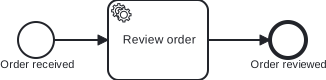
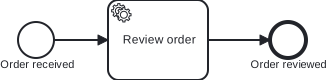
5 findings
StartEvent_1Element id looks generated — give it a readable, stable nameActivity_0049ryxElement id looks generated — give it a readable, stable nameEvent_1x9j8k7Element id looks generated — give it a readable, stable nameFlow_0a1b2c3Element id looks generated — give it a readable, stable nameFlow_1sy6h9pElement id looks generated — give it a readable, stable name
IDs generated rather than chosen (Activity_0049ryx, StartEvent_1). Read the rule
Ids off the naming convention
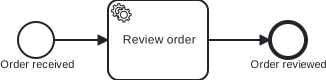
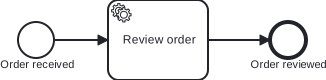
5 findings
OrderReceivedElement id must match the naming convention <startEvent_camelCase>ReviewOrderElement id must match the naming convention <serviceTask_camelCase>OrderReviewedElement id must match the naming convention <endEvent_camelCase>ReceivedToReviewElement id must match the naming convention <flow_camelCase>ReviewToReviewedElement id must match the naming convention <flow_camelCase>
IDs that don't follow the type-prefix + case convention. Read the rule
Both rules are off while modeling and switch on once a process is wired up for execution. See Presets.